While money alone cannot erase the harm caused, survivors of historical child abuse (sexual, physical and emotional) can now bring claims against the institutions where the abuse occurred.
Coming to terms with emotional, physical, or sexual abuse, regardless of when it happened, can be difficult. For many victims, it is also important to formally receive acknowledgment of the wrongs committed and an apology.
Our promise as institutional & historical child abuse lawyers is to stand by those who’ve endured abuse, offering understanding, support, and discretion at every step.
If you or someone who is close to you has been a victim of abuse whilst in the care of an institution, you are entitled to and deserve compensation.
Our team support people across Australia – please get in touch to connect confidentially with one of our expert team members.
CASE STUDIES
BOB’S STORY
Click to read moreOUR EXPERIENCE
THE PROCESS
We are here to help, and as leading institutional & historical child abuse lawyers we continue to obtain results and outcomes for our clients, most of whom had not disclosed the unfortunate abuse to anyone prior to engaging our firm.
Before making any decision regarding the National Redress Scheme, consult with our institutional abuse lawyers to ensure you make an informed choice that best serves your interests.
At MEJ we have the experience to help you through this process with understanding and compassion.
You can chat to our specialists, one-on-one, in our office, at your home, on-line or in an environment where you feel most comfortable. You can also start the process by phoning us on behalf of a family member.
To help you understand the process, the MEJ team have answered some common questions about institutional abuse claims.
Whether dealing with clergy members, schools, or sporting organisations, our institutional abuse lawyers have successfully filed claims against a range of institutions.
Whilst we can’t name every institution we have brought a claim against, claims can generally be categorised as follows:
- Clergy members and Church Claims
- School Claims
- Defence Department Claims
- Claims against The Commonwealth & State Governments
- Associations
- Sporting Organisations.
No. We will provide you with advice as to the specific circumstances of your claim.
Yes we do. Before you accept any offer from the National Redress Scheme, please speak to a lawyer first. Accepting an offer from the National Redress Scheme can negatively impact your proper compensation claim that you may have against the Institution directly, and MEJ can help you make an informed decision.
Whether dealing with clergy members, schools, or sporting organisations, our institutional abuse lawyers have successfully filed claims against a range of institutions.
Whilst we can’t name every institution we have brought a claim against, claims can generally be categorised as follows:
- Clergy members and Church Claims
- School Claims
- Defence Department Claims
- Claims against The Commonwealth & State Governments
- Associations
- Sporting Organisations.
No it does not. Our experienced team deals with claims across the country.
Yes we do. Please speak to us and we can assist you.
Yes, whether you’re looking to report an abuse or seeking guidance on another’s experience, our institutional & historical child abuse lawyers are here to help every step of the way.
SITES



WITNESS CALL OUTS

Tasmania Police misconduct: know your rights
In 2026, the Tasmanian Parliament did something it hadn’t done before. It established a formal inquiry into how Tasmania...

Christian Brothers scheme announcement: Survivors should be suspicious
The Christian Brothers Oceania Province has announced plans to pursue a creditors’ scheme of arrangement. This formal court-supervised process...

Institutional abuse at St Virgil’s College, Hobart
St Virgil’s College is a Catholic boys’ school in Hobart, established in 1911 by the Congregation of Christian Brothers....
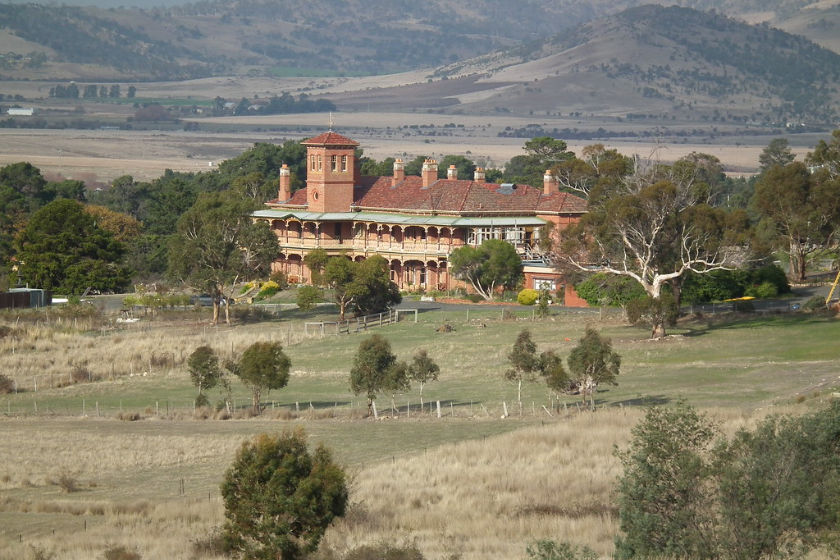
Abuse in Tasmania’s south: Mt St Canice (Magdalen Home), Wybra Hall, and Wirksworth Camp
Southern Tasmania was home to a number of residential institutions where children and young people in state or church...

Institutional abuse in northern Tasmania: Ashley Home for Boys, Weeroona Girls’ Training Centre, and Allambee Unit
In the decades following World War II, the Tasmanian Government operated a network of residential institutions for children and...

Institutional failures within Tasmania Police: child sexual abuse and the case of Paul Reynolds
Police services hold a unique position of trust in the community. For most Tasmanians, contact with police involves the...

Police failures – What the Paul “Beau” Reynolds case reveals about Institutional Abuse and accountability
The recent Independent Review by former war crimes prosecutor Regina Weiss into former Tasmania Police officer Paul “Beau” Reynolds has exposed...

Calling for witnesses of child abuse in Launceston
Maliganis Edwards Johnson (MEJ) are investigating claims of sexual abuse in Launceston. The victims were all minors at the...

Calling for witnesses of child abuse in the ACT
MEJ are investigating claims of physical and sexual abuse alleged to have been perpetrated at the following institutions: Quamby...

Calling for witnesses of abuse at Barrington Boys’ Home in Tasmania
Maliganis Edwards Johnson (MEJ) are investigating claims of physical and sexual abuse, alleged to have occurred at Barrington Boys’ Home in...

Calling for witnesses of child abuse in Tasmania
Maliganis Edwards Johnson (MEJ) are investigating claims of physical and sexual abuse alleged to have occurred at the following...
“Having James Treloar and MEJ represent us has been invaluable. Their expertise and dedication ensured a successful outcome, allowing my son to access the dental and medical care he requires following his accident. Thanks to MEJ, his recovery can continue without financial uncertainty. We are deeply appreciative of their professionalism and commitment.”
— Lou G
Frequently Asked Questions
Yes. If you experienced abuse as a child in an institutional setting, whether at a school, church, sporting organisation, or elsewhere, you may still be able to make a claim, even if the abuse happened many years or decades ago.
For many institutional child abuse cases, the time limits that would ordinarily apply to legal claims have been removed. This was a significant and hard-won reform, and it means that survivors who were not ready or able to come forward earlier are not necessarily shut out of the legal system.
If you are unsure whether your circumstances are covered, please reach out to us. We will listen carefully and give you clear, honest advice.
There are two main pathways available to survivors of institutional child abuse, and understanding the difference is important.
The National Redress Scheme is a government-administered process that can provide a financial payment, access to counselling, and a direct personal response from the responsible institution.
A civil compensation claim, by contrast, seeks damages through the legal system and can result in significantly higher financial outcomes, particularly where the abuse has had serious and lasting effects on your life.
The right pathway depends on your individual circumstances, your goals, and the institution involved. At MEJ, we will help you understand both options clearly so you can make the decision that is right for you, without pressure.
Not necessarily. Many institutional abuse claims are resolved through negotiation or settlement, without the need for a trial. We understand that court proceedings can feel daunting, and we always explore every opportunity to resolve claims in a way that spares our clients unnecessary stress.
That said, your compensation outcome should properly reflect what you have been through and what you are entitled to. If litigation is needed to achieve a fair outcome, we will be with you every step of the way.
In some circumstances, yes. Legal guardians may be able to bring a claim on behalf of a survivor who lacks the capacity to do so themselves, and in some cases an estate may be able to pursue a claim on behalf of a survivor who has passed away.
These situations involve additional legal complexity, and the rules can vary depending on the circumstances. If you are enquiring on behalf of a loved one, we encourage you to contact us so we can advise you on what may be possible.
We know that one of the greatest fears survivors have about coming forward is not having enough evidence. Please do not let that fear stop you from seeking advice.
Historical abuse claims can be supported by many different types of evidence, eg your own account of what happened, medical or psychological records, documents held by the institution, and statements from others who were there or who witnessed the impact on your life. In most cases, the survivor’s own testimony is central to the claim.
At MEJ, we have experience in handling sensitive and complex historical claims. We will work with you carefully and compassionately to identify what evidence is available and build the strongest possible case, in a way that works for you.